The business news in November 2026 clearly demonstrates how closely artificial intelligence is intertwined with geopolitics today. The US Department of Commerce and the US Department of Justice are investigating an Nvidia partner in Singapore for potential violations of export controls; no charges have been filed to date.10 Nvidia has since established its own board committee for national security and export control.11 Chips, supply chains, and politics are all bound together in a single story.
For companies, this is not a distant issue. 96% of German companies source digital technologies from abroad. If these imports were to fail, they estimate they could hold out for an average of 16 months (Bitkom, October 2026).1 This article contextualizes what digital sovereignty in AI actually means, where the dependencies lie, what leverage Europe has, and why a company's own data in the ERP system plays a special role in this.
What does digital sovereignty mean in the context of AI?
Digital sovereignty is the ability to use digital technologies in a self-determined manner and to switch them when necessary. It is not the same as self-sufficiency. Bitkom President Ralf Wintergerst puts it in a nutshell: "This is not about isolation or even self-sufficiency. It is about reducing one-sided dependencies and being able to respond adequately to pressure."1
In practice, three dimensions can be distinguished:
- Data sovereignty: Who has access to the data, and which law applies to it?
- Technological independence: Can a company swap out providers, models, or infrastructure without putting its business at risk?
- Freedom of design: Can the technology be adapted to your own processes, instead of having to conform to a provider's specifications?
The EU Commission is also thinking in shades of grey rather than black and white. Its proposal for a Cloud and AI Development Act (CADA) of 3 June 2026 provides for an EU-wide assessment framework with four levels of sovereignty, from which public bodies choose based on their risk assessment.5 From level two onwards, customer data may not be used for AI training in third countries.6 The CADA is still a proposal currently being debated by Parliament and the Council.
Where are the dependencies? The AI chain
AI is created in a chain whose links span multiple continents. The dependency runs in both directions: the most advanced chips can only be manufactured using EUV lithography systems, which are supplied solely by the Dutch company ASML.12
Every stage of the AI value chain depends on a few providers. Europe holds its own leverage.
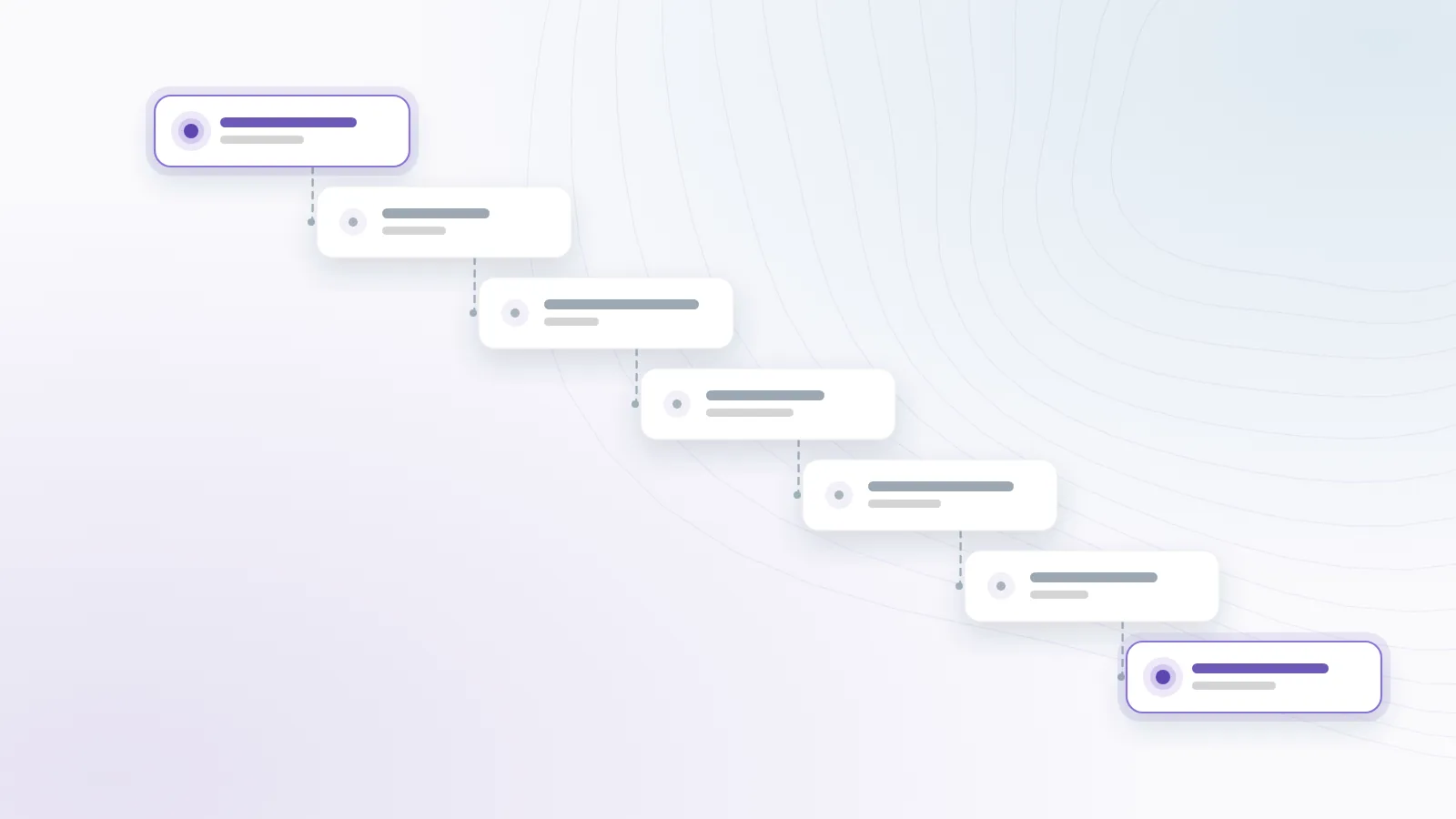
From the exposure system to your own data: each stage builds on the previous one.
- Lithography systemsEUV exposure, manufacturer ASML (Netherlands)Europe's leverage: no cutting-edge chips without EUV systems
- Chip manufacturingLeading-edge chips are predominantly produced in Taiwan49% of importing companies feel dependent on Taiwan
- AI chips (GPUs)Market leader Nvidia (USA)Risk: Export controls
- Data Centers and CloudUS hyperscalers and European providersRisk: Access under foreign law (CLOUD Act), lock-in
- Foundation ModelsFrontier models mostly from the US, open models also from EuropeRisk: blocked access. Solution: open models
- ApplicationsERP, CRM, assistants, agentsRisk: Shadow AI in the workplace
- Company DataMaster Data, Orders, Process KnowledgeYour Leverage: Where Data Resides and Who Trains with It
Graphic: Swiftron. Data on Taiwan: Bitkom, October 2026 (23% highly, 26% rather dependent). Free to use with attribution and a link to this article.
The higher up a link in the chain is, the less influence an individual company has over it. At the lower end, with one's own data, the scope for design and action is greatest. This is precisely where it is decided whether a company remains capable of acting in an emergency.
When access is lost: three types of dependency
Dependency only becomes visible when something fails. Three examples from recent months show the levels at which this can happen.
1. Political decisions
On June 12, 2026, Anthropic was forced to suspend access to its most powerful models, Fable 5 and Mythos 5, by order of the US government. The export control order prohibited any access by foreign nationals. Consequently, Anthropic shut down both models for all customers. Following the lifting of the order, Fable 5 has been available worldwide again since July 1, while Mythos 5 remains restricted to selected US organizations. For nearly three weeks, the decision was entirely out of the customers' hands.8
2. Legal Framework
The US CLOUD Act of 2018 obliges companies under US law to disclose data upon government order, regardless of where the servers are located. Before an investigative committee of the French Senate on June 10, 2025, the Director of Public and Legal Affairs of Microsoft France declared under oath that he could not guarantee that the data of French citizens would never reach US authorities without consent. He noted that this had not occurred so far. At the same time, Microsoft emphasized that it has contractually committed to challenging unfounded requests.9
Therefore, the legal system to which a provider is subject is the decisive factor, not just the location of the data center.
3. Supply Chains and Governance
Almost every AI application runs on chips from just a few manufacturers. When one of them is under investigation, markets and politicians react immediately. On November 17, 2026, Nvidia established its own board committee for national security and export control.11
Companies are feeling the impact. According to Bitkom, significantly more companies today feel exposed to pressure from abroad than just two years ago, and concern over dependence on the US has almost doubled:1
Concerns about digital dependency are growing rapidly
Percentage of surveyed companies in Germany. The statement regarding resistance refers to companies that import or export digital technologies.
20242026
- are concerned about digital dependence on the US20242026
- effectively have no way of defending themselves against pressure from foreign partners or governments20242026
Source: Bitkom, October 2026. Graphic: Swiftron.
Open models: Europe's answer, with limits
Open models mitigate the risk of a provider blocking access. Their weights—the parameters learned during training—can be downloaded and run on your own or European infrastructure. Two examples from the German-speaking region:
- Apertus (Switzerland): Released in September 2025 by EPFL, ETH Zurich, and the national supercomputing center CSCS, with 8 and 70 billion parameters, trained on texts from over 1,000 languages. Over 10 million GPU hours on the "Alps" supercomputer were made available for this.13
- Soofi (Germany): A consortium of research institutions and AI companies funded by the Federal Ministry for Economic Affairs and Climate Action, coordinated by the German AI Association (KI-Bundesverband). The tech report for the first model, Soofi S, was released in July 2026: 30 billion parameters, with around 3 billion active per computation step.14
How far behind the leaders are you?
According to the Stanford AI Index 2026, the best closed-source model in March 2026 was around 3.3% ahead of the best open-source model in the Arena leaderboard evaluation. In August 2024, the gap was only 0.5%. The gap has therefore widened again in 2025.4 For many business tasks, this gap is small. For cutting-edge applications, it can be decisive.
Hardware remains the bottleneck
Even open European models are built on US chips: Apertus was trained on "Alps" using Nvidia GH200 chips13, Soofi on Deutsche Telekom's AI factory in Munich using Nvidia Blackwell GPUs.14, 15 Open weights break the dependency on the model provider, not on the chip manufacturer.
Two financing options
Apertus and Soofi are publicly funded, much like railways or roads. In the US, private capital dominates, and the gap is enormous:4
Private AI Investments 2025
in billions of US dollars
Source: Stanford HAI, AI Index Report 2026 (Data: Quid). Europe grouped as a region. Graphic: Swiftron.
However, Europe is also familiar with the venture capital route: In 2025, lithography specialist ASML led the 1.7 billion euro funding round for French AI provider Mistral, investing 1.3 billion euros itself and holding around 11% since then.16 At the same time, the EU aims to expand its infrastructure. The CADA proposal plans to at least triple the EU's data center capacity within five to seven years.5
Read more · AI Strategy Keynote: AI is more European than we thinkWhy ERP data is the ultimate lever for sovereignty
Europe has only limited control over its own chips and language models. Its own business data, however, is a different story. And this data is becoming increasingly important for AI.
Dependency hits the core business
If digital imports were to fail, companies procuring such technologies expect the impact to be felt right where their ERP system operates:1
expect impacts on production or service delivery
Source: Bitkom, Oct. 2026expect an impact on sales and distribution
Source: Bitkom, Oct. 2026expect impact on logistics and supply chains
Source: Bitkom, Oct. 2026In addition, purchasing and procurement account for 79%. These are precisely the processes that an ERP system maps.
AI is increasingly learning from tables instead of text
Orders, master data, inventory movements: ERP data is structured, meaning it is organized in rows and columns. A dedicated model class is emerging for this, known as Tabular Foundation Models. One example is TabPFN from Freiburg. This transformer model was pre-trained on over 100 million synthetic datasets and, in classification tasks, outperformed the strongest conventional methods—which had been optimized for four hours—in just 2.8 seconds.17 SAP announced the acquisition of the startup behind it, Prior Labs, in May 2026 and completed it in July. Over the next four years, SAP plans to invest more than one billion euros to build a world-leading AI laboratory for structured business data in Europe.18
The same architecture that models word sequences can also be applied to event sequences, such as a customer's order history. Anyone who trains or adapts such models with their own data also decides where this data is processed. What lies within order data is revealed by our AI potential analysis based on your ERP data.
The legal right to switch providers is being strengthened
Since September 12, 2025, the switching rules of the EU Data Act have applied to cloud services. As of January 12, 2027, providers may no longer charge switching fees for a transition.7 This makes an exit more predictable, provided that data and configurations can be exported in common formats.
ERP migrations are decisions of sovereignty
Mainstream maintenance for SAP Business Suite 7 will end on December 31, 2027, and the optional Extended Maintenance on December 31, 2030. Those who need more time can use the Transition Option. Since October 2026, these subscriptions can run until the end of 2035, subject to further conditions, including migrating to the SAP ERP Private Edition by the end of 2030. According to SAP, this is explicitly not an extension of maintenance.19 Many companies will therefore be deciding over the next few years anyway where and how their ERP will be operated in the future.
The deadlines shaping your next IT decision
Cloud migration and ERP maintenance at a glance
- 12.09.2025The switching rules of the EU Data Act for cloud services apply.
- 23.11.2026As of this post
- 12/01/2027Egress fees for cloud services are waived.
- 31.12.2027Mainstream maintenance for SAP Business Suite 7 ends.
- 31.12.2030Optional extended maintenance for SAP Business Suite 7 ends.
- 31.12.2035Latest end of the transition option (assuming migration to SAP ERP Private Edition by the end of 2030).
Sources: Federal Network Agency, SAP. Graphic: Swiftron.
Shadow AI: Why bans do not protect your data
The best sovereignty strategy loses its impact when employees resort to their personal smartphones. Nearly three out of ten employees who use AI for work use tools that have not been provided by their employer. The German Economic Institute (IW) explicitly interprets this shadow AI as a signal of demand.3
Surprisingly, where employers strongly encourage AI skills, 44.5% of employees use shadow AI. Where no encouragement is perceived, the figure is 21.3%, which is less than half as many. The data comes from a 2024 IW survey and shows a correlation, not proof of cause and effect.3 Anyone who sparks an interest in AI must therefore also offer a suitable tool. At the same time, in 2025, only a quarter of companies (26%) provided their employees with any access to generative AI at all.2
The numbers suggest that an approved, high-quality offering protects corporate data better than a flat-out ban.
Does your company provide employees with an approved AI tool?
Anonymous, no registration required. We evaluate the responses in aggregate.
Thank you for your vote!
Conclusion: Dependency on what terms?
The question is no longer "Independence at all costs?", but rather: On what terms are we dependent, and can we change them? Companies have begun to answer this. Of those that source digital technologies from abroad, 44% are increasingly relying on providers from Germany and Europe, while 40% are preparing to be able to replace key providers and systems if necessary. Only 3% have done nothing so far.1
Five key questions help with the classification:
Who can pull the plug on us?
Which providers, models, and jurisdictions affect our critical processes?
How quickly could we switch?
Can data, configurations, and interfaces be exported in standard formats?
Where is our business data stored?
And who is allowed to train with it?
Which tasks really require the most powerful model?
And where is an open-source model on European infrastructure sufficient?
What do we offer our employees?
So that they do not resort to using private tools.
Sovereignty is therefore less of a state than a capability: the capability to know, assess, and, if necessary, change one's own dependencies.
Glossary
- Foundation Model
- A large AI model pretrained on broad data that can subsequently be adapted for many tasks. Read more about this in our guide to generative AI.
- Frontier model
- State-of-the-art model, usually only accessible via the manufacturer's cloud.
- Open-weight model
- A model whose learned parameters (weights) are published and which can be operated on one's own infrastructure.
- Parameters
- The numerical values of a model learned during training, a rough measure of its size.
- Transformer
- Model architecture that recognizes relationships in sequences. Originally words in text, today also table rows or events.
- Tabular Foundation Model
- Foundation model specifically for structured data in rows and columns, such as from ERP systems.
- GPU
- Graphics processing unit, the standard hardware for training and running AI models.
- EUV lithography
- Exposure process using extreme ultraviolet light, without which the most modern chips cannot be manufactured.
- Hyperscalers
- Very large cloud provider with global data centers, for example AWS, Microsoft Azure, or Google Cloud.
- Export controls
- Government restrictions on the export of certain technologies, such as high-performance chips or AI models.
- CLOUD Act
- US law from 2018 that can oblige US companies to disclose data to US authorities, regardless of the storage location.
- EU Data Act
- EU regulation that, among other things, makes it easier to switch between cloud providers. Switching fees will be eliminated starting January 12, 2027.
- Lock-in
- Vendor lock-in, because a switch is technically, legally, or financially too costly.
- Shadow AI
- Use of AI tools at the workplace that have not been provided or approved by the employer.
Frequently Asked Questions
What does digital sovereignty mean in the context of AI?
A company's ability to use AI self-determinately: It knows who has access to its data, can switch providers and models, and can adapt the technology to its own processes. This does not mean complete independence.
Does a data center in the EU protect against access by US authorities?
Not automatically. The US CLOUD Act can oblige companies subject to US law to disclose data, even if the servers are located in Europe. The decisive factor is which jurisdiction the provider is subject to and what has been contractually agreed. A legal review is advisable for your individual case.
Are open AI models a real alternative?
For many business tasks, yes. According to the Stanford AI Index 2026, the best open model is only a few percentage points behind the best closed one. Open models reduce the risk of blocked access, but they also run on chips from only a few manufacturers.
What does the EU Data Act change when switching cloud providers?
Since September 12, 2025, rules have been in place to make switching easier. As of January 12, 2027, providers are no longer allowed to charge switching fees. For the switch to be successful in practice, data and configurations must be exportable in common formats.
What does digital sovereignty have to do with the ERP system?
The ERP holds the data that matters most in the event of a system failure: sales, logistics, purchasing. At the same time, this structured data is becoming increasingly valuable for AI. Where it is processed and who is allowed to train with it is the part of the chain that a company can determine for itself.
Sources
- Bitkom (19.10.2026): 16 months: That is how long Germany's companies could survive without digital imports
- Bitkom (21.10.2025): Employees are increasingly using shadow AI
- IW Köln, Engels and Hammermann (19.09.2026): Shadow AI: Employees are faster than their companies
- Stanford HAI, AI Index Report 2026: Technical Performance Chapter and Economy Chapter
- EU Commission (03.06.2026): Tech Sovereignty Package with the Cloud and AI Development Act and Overview of the Cloud and AI Development Act
- Euronews (22.06.2026): EU law on cloud and AI meets with mixed reactions
- Federal Network Agency: Data Act: Questions and answers for providers
- Anthropic (12/06/2026): Statement on the US government directive to suspend access to Fable 5 and Mythos 5 and (30/06/2026) Redeploying Fable 5
- French Senate (10.06.2025): Minutes of the hearing of Microsoft France; reports by The Register and it-daily
- Handelsblatt (17/11/2026): US authorities publish details of investigation into Megaspeed
- Nvidia (17.11.2026): Board of Directors establishes National Security and Export Control Oversight Committee
- ASML: Annual Report 2025, Strategic Report (PDF): the world's only manufacturer of EUV lithography systems
- EPFL (02.09.2025): Apertus: a fully open, transparent, multilingual language model and Apertus-Tech-Report (arXiv 2509.14233)
- Soofi: Sovereign Open Source Foundation Models and Soofi-S-Tech-Report (arXiv 2607.09424)
- Deutsche Telekom (09.11.2026): AI demand rises: Telekom expands AI factory in Munich
- Mistral AI (09.09.2025): Mistral AI raises €1.7B to accelerate technological progress with AI
- Hollmann et al., Nature 637 (2025): Accurate predictions on small data with a tabular foundation model; University of Freiburg via idw
- SAP (04.05.2026): SAP to Acquire Prior Labs and (17.07.2026) SAP Completes Acquisition of Prior Labs
- SAP: Maintenance deadlines for SAP Business Suite 7 and Transition Option for SAP ERP Private Edition (Update from 13.10.2026)